
Clayface: A Twisted Film That Gets Almost Everything Right
 Shekharr Khandelwal
October 24, 2026
12 min read

Plot
Matt Hagen (Tom Rhys Harries) is a handsome young actor whose life seems perfect when he receives an Oscar nomination. While celebrating his success, he meets Mia Torrez (Joana Ribeiro) at a nightclub, unaware that she is the girlfriend of Gotham’s powerful gangster, Markos Szabo (David Dencik). When Markos catches them together, he brutally damages Matt’s face, destroying his career and confidence. After multiple unsuccessful surgeries, Matt turns to Dr. Caitlyn Corr (Naomi Ackie), a scientist developing an experimental treatment that can regenerate damaged tissue. Desperate to get his life back, Matt agrees to become her human experiment, but when the treatment starts changing him in unexpected ways, his search for a cure takes a horrifying turn.
Is Clayface Worth Watching?
Yes, definitely! Clayface is one of those movies that reminds you how much potential DC has when it explores the darker side of its universe. While recent DC projects have also embraced a brighter and more colourful tone, Clayface takes a completely different route, focusing on body horror, psychological turmoil, corruption, and the transformation of a man who has lost almost everything. I really appreciate the fact that the film does not try to fit into the usual superhero movie formula, because it allows the story to become much more personal and disturbing.
Big ups to the director, James Watkins, because the direction is crisp, straight to the point, and manages to give you the highs and lows that a story like this needs. The film does not waste too much time explaining things that you can understand through the characters and their actions, and that really helps keep the story moving. What I particularly liked is that Clayface does not feel like it is trying to be dark just for the sake of being dark, because the emotional journey of Matt Hagen gives the film a reason to explore such disturbing territory.
Acting
Acting-wise, Tom Rhys Harries has absolutely nailed it, to be honest. You will feel genuinely bad for Matt when he goes through the emotional turmoil of losing his face, his career, and the life he had imagined for himself. There is an early scene where Matt celebrates his award nomination and gets emotional while talking about his late mother, and I really liked how Harries handled that moment. It gives you that feeling of finally making it in life and wanting to share that happiness with someone who is no longer around, and the way he delivers the scene makes it surprisingly easy to connect with a character you have only just met.
What makes this performance even better is that it happens so early in the film. Usually, you need time to understand a character, watch them struggle, and see them rise before you become emotionally invested in their journey, but Harries manages to make you feel for Matt almost immediately. The way he expresses his gratitude towards his mother genuinely touched my heart, because there is something very relatable about wanting to make the people who believed in you proud. It is a small but important moment that gives us an emotional connection to Matt before the film starts putting him through everything else.
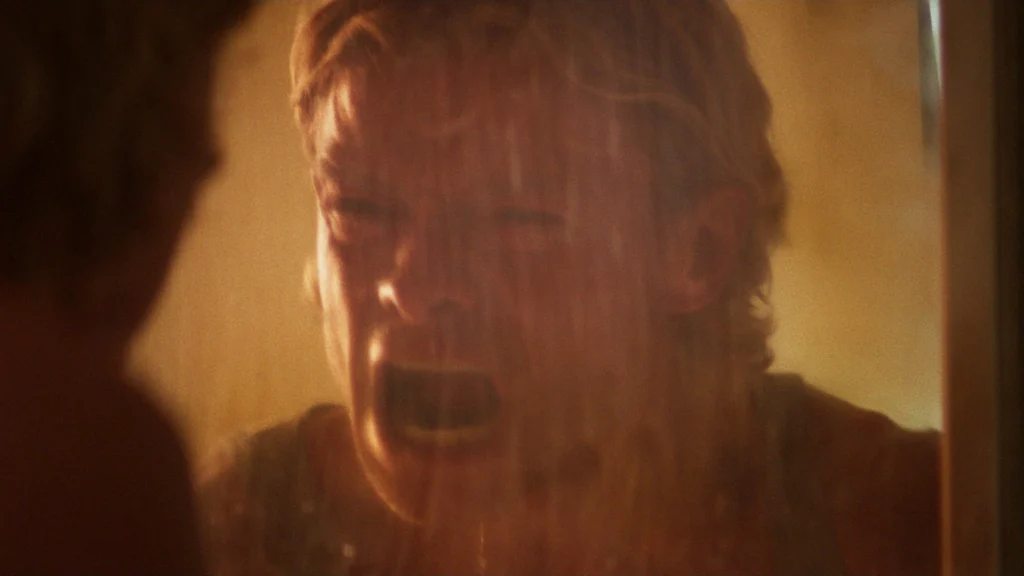
Another thing I really liked was how the film portrays Matt’s helplessness when he tries to fight back against Markos Szabo through the legal system. You can see how powerless an ordinary person can feel when they are standing against someone who has money, influence, and an entire city living in fear of him. The corruption within Gotham becomes very apparent through the courtroom proceedings, the jury, and the people who are too afraid to speak against Markos. It also reminds you of the kind of environment that gives rise to someone like Batman, because when the system itself fails to protect people, the powerful can practically get away with anything.
For me, Matt’s character goes through three major emotional stages, and Harries makes all of them work. First, you feel happy for him when he is finally getting the recognition he deserves, then you feel terrible for him when his life falls apart in a way that would break almost anyone, and finally, you witness his transformation into someone capable of doing terrible things. The interesting part is that his descent into villainy does not immediately make you judge him or dismiss him as a bad person, because the film makes you understand how he arrived at that point. You may not agree with his actions, but you can understand the anger, desperation, ego, and obsession driving them, and that is where Harries’ performance really shines.
I am not equally convinced by every other performance in the film, and I am not sure I connected with the gangster’s character as much as I wanted to. However, Tom Rhys Harries overshadows almost everyone around him, and that is the biggest appreciation I want to give him. He has done a fantastic job of making Matt Hagen feel human before turning him into something terrifying, and I genuinely hope we get to see more of him in future DC projects. I can absolutely imagine him becoming a compelling villain in the DC universe, especially after seeing what he manages to do with this character.
What I Liked About Clayface
First of all, I really appreciate the editing by Jon Harris, because the film moves from one point to another without making you feel distracted or unsatisfied. Each scene gives you something to think about, something to feel, or something to anticipate, and that keeps you hooked throughout the runtime. The first half is particularly effective at establishing how corrupt Gotham is, how afraid people are of Markos, and how Matt becomes a victim of a society where money and power can decide whose life matters. The chain of events feels convincing because we first see his success, then the celebration, followed by the tragedy, and finally a glimmer of hope that makes you wonder whether he can actually recover.
By the time the second half begins, you already have a feeling that things are going to get much worse for Matt, especially because the film drops enough hints about his transformation and the direction his life is heading. However, the first half does a good job of building anticipation rather than rushing towards the horror, and I found myself genuinely looking forward to seeing what would happen next. The second half, on the other hand, is all about destruction, and not just the physical transformation of Matt’s body, but also the way his obsession begins to consume him. He believes that he is in love with someone, but as the story progresses, you start noticing how much of that feeling is actually obsession, ego, and the desire to regain the power he believes he has lost.

The music by Volker Bertelmann also deserves appreciation, because it complements the scenes really well instead of simply telling you what to feel. There are moments where the music adds another layer to the tension and makes an already disturbing sequence even more effective, particularly during the scene where Matt overdoses himself. I really liked how the score works alongside the visuals to create an uncomfortable feeling without constantly relying on loud music or obvious horror cues. It is one of those things that you might not consciously notice in every scene, but it definitely contributes to the overall experience.
Can we also take a moment to appreciate how far the film goes with its climax? I have watched so many superhero movies where the hero or villain has incredible powers, but the actual moments where they get to use those powers to their full potential are spread across a few isolated scenes. You get a little bit of action here, a little bit of destruction there, and just when you start getting invested in the spectacle, the film moves on to something else. Clayface, however, really goes all in during its climax, showing just how terrifying a villain can become when he has the ability to manipulate his appearance and use his powers to get revenge on the people he believes have wronged him.
At some point, I did feel that the shape-shifting became a little overwhelming, but when I look at the bigger picture, I am glad the filmmakers did not hold back. They did not seem afraid of showing just how powerful and dangerous Clayface could become, and that makes the climax much more satisfying. His transformation is not just about showing off a superpower, because it becomes an extension of his anger, his desperation, and his need to take control of a life that has been taken away from him. I really appreciate that the film commits to this idea instead of giving us a few smaller moments of horror and then moving on.
I also understand that the overall story can feel predictable at times, but that does not stop me from enjoying the film. Like I always say, it is okay for a story to be predictable as long as the execution is good, and Clayface is a great example of how much the filmmaking can contribute to the experience. You might guess what is going to happen at certain points, but the performances, editing, music, and visual effects keep you invested in how those events unfold. The film does not need to reinvent the wheel at every stage, because it understands that sometimes the way you tell a story matters just as much as the story itself.
Another thing I really liked was how I could see shades of three different films in Clayface, particularly in the way it explores physical appearance, self-worth, obsession, and the transformation of a person who is struggling with his own identity. The first film that came to mind was A Different Man, which also explores a character who undergoes an experimental procedure to change his appearance. Both films explore the idea that changing the way you look does not automatically fix what is happening inside you, because insecurity, ego, and the need for validation can follow you even when your physical appearance changes. I found some interesting similarities between the two films, especially in the way they approach the relationship between appearance and identity.
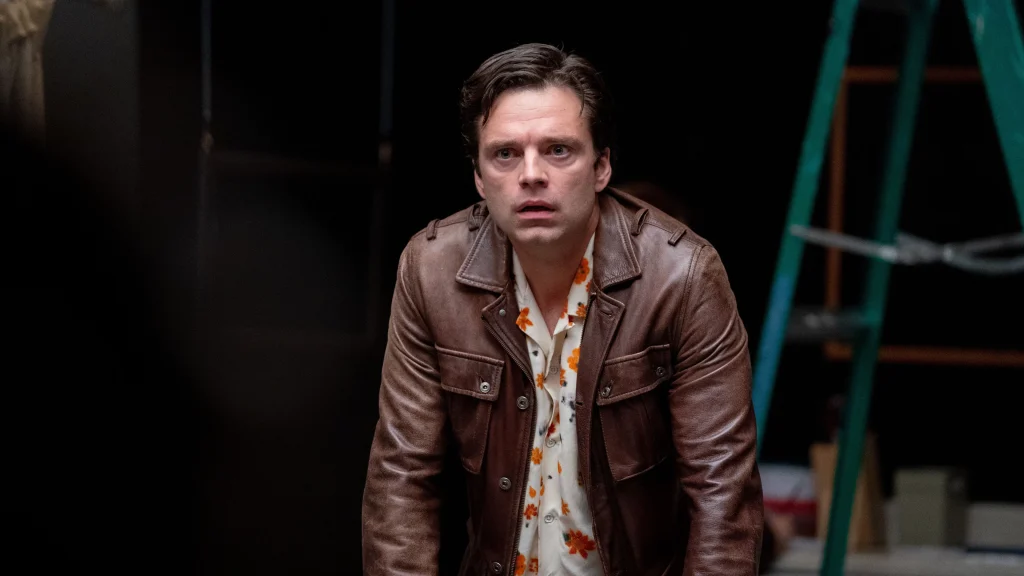
The second film that came to mind was Spider-Man, particularly the Green Goblin storyline. I do not want to spoil the specific moments I am referring to, but there are scenes in Clayface that reminded me of the way Norman Osborn interacts with his darker side. The idea of a character slowly losing control over himself and being consumed by the person he is becoming works really well here, and I particularly liked how Clayface approaches those moments. The third film I thought of was Vanilla Sky, where Tom Cruise’s character goes through a terrible accident that changes his appearance and struggles with the consequences of losing the life he once had. There are similarities in the way both films explore beauty, self-pity, identity, and how differently people can be treated when they no longer fit society’s expectations of what is attractive.
What I particularly appreciate is how these ideas come together in Clayface without taking away from the experience of watching the film itself. The story explores what happens when someone who has always benefited from being good-looking suddenly loses that privilege, and how quickly their sense of identity can begin to fall apart. Matt’s journey becomes much more interesting when you consider how much of his happiness was connected to the way the world perceived him, and how desperate he becomes to get that version of his life back. I really liked these elements because they add another layer to the horror, making the film about more than just a man whose face has been destroyed.
What I Didn’t Really Like About Clayface
Honestly, there is no major issue I have with Clayface, because it delivers almost everything I wanted from this kind of film. If I had to point out something that affected my experience, it would be the Indian censorship, particularly the way some intimate scenes have been edited. When you are watching an A-rated film that includes mature themes, cutting out intimate moments can sometimes make the viewing experience feel awkward rather than making it more comfortable. In some scenes, the framing becomes noticeably tighter because the film has been zoomed in to hide certain details, and that can take you out of the moment when you are supposed to be focusing on the characters and what is happening on screen.
What makes it more frustrating is that the film contains several graphic gore sequences that work really well within the story, but there are also moments where blurring and other censorship choices become noticeable. I understand that different markets have different certification requirements, but I personally do not like it when these changes interfere with the way a scene was originally composed. It is not that the intimate scenes are the most important part of the film, but when the editing and framing become distracting because of censorship, it can spoil some of the experience. Apart from that, I had a really good time watching Clayface, and I do not have any major complaints about the film itself.

Discussion
Join the conversation — comments are for members.
Create an account or log in