
Hope: Visually Stunning But Tests Your Patience
 Shekharr Khandelwal
October 24, 2026
9 min read
Plot
Set in the remote South Korean village of Hope Harbor, Hope begins when locals discover dead cattle and other animals under mysterious circumstances, raising questions about what could have caused such destruction. When the police arrive to investigate, they discover a horrifying situation, with dead bodies scattered around, the village in ruins, and the entire place looking like it has survived a full-scale apocalypse. As the remaining survivors try to understand what has happened, they encounter terrifying extraterrestrial creatures hiding in the surrounding forest. What initially seems like a mysterious incident soon turns into a fight for survival as these creatures begin hunting humans, pushing the village towards a terrifying battle against something they have never encountered before.
Is Hope Worth Watching?
Yes, if you are more interested in visual filmmaking than storytelling. By that, I mean if you enjoy watching a film where the visuals, cinematography, art direction, and atmosphere do most of the heavy lifting, then Hope is definitely worth watching in theatres. The film does a fantastic job of creating an apocalyptic environment that feels believable on the big screen, and the anticipation built around the creatures makes certain scenes genuinely intense. Although the CGI used for the aliens is not particularly impressive, the way these scenes are executed makes you focus more on what is happening rather than how the creatures actually look.
However, if you are someone who prioritises storytelling and pacing, Hope might feel underwhelming because the film stretches its story across almost two and a half hours, which felt unnecessary to me. I genuinely think this could have been a much faster-paced alien invasion movie, but I also understand the filmmaking approach because the director, Na Hong-jin, is known for The Wailing, which also builds its horror through a slow, dreadful atmosphere and the gradual discovery of something sinister within a village. Hope follows a similar approach, allowing the environment and the anticipation to build before things get out of control. So, if you want a visual treat, this is a good watch, but if you are primarily looking for a tightly written story, the experience might not be as satisfying.
Acting
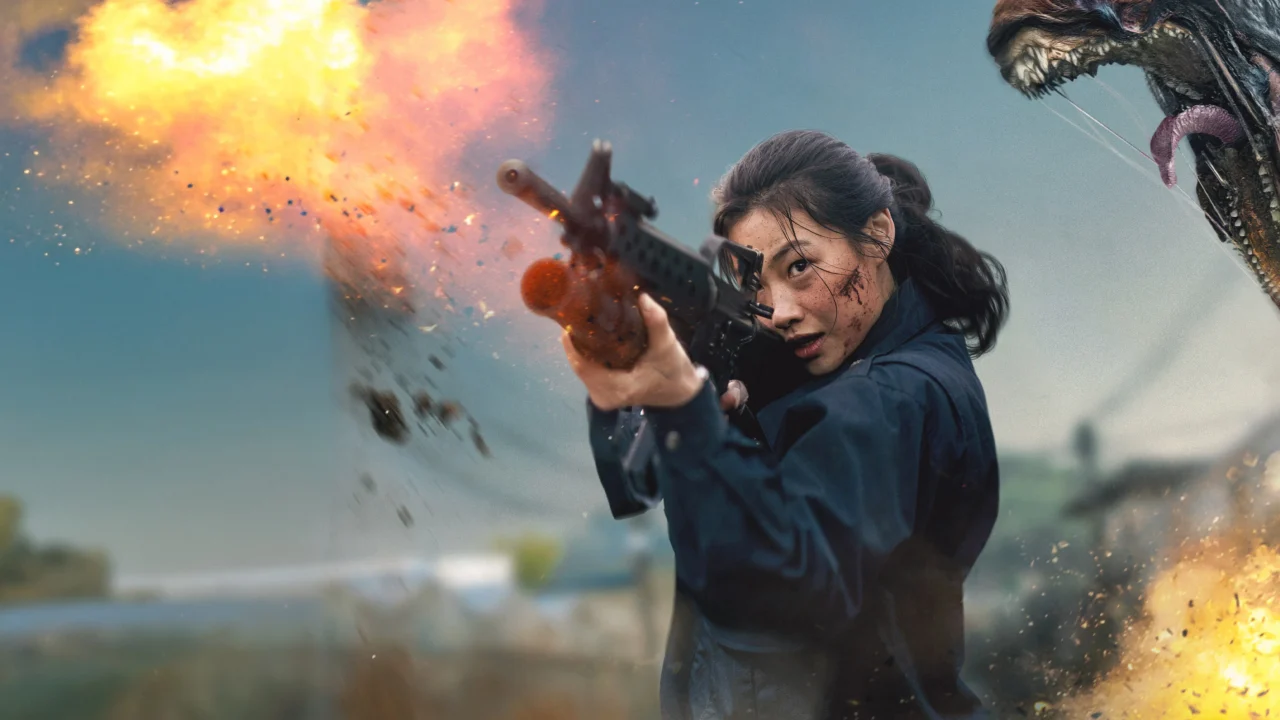
To be honest, I really like Korean actors because their performances often feel incredibly natural to me. They do not always come across as overly polished or exaggerated, and there is something about the way they deliver their dialogues and react to situations that makes their characters feel believable. I was not necessarily familiar with every actor in Hope before watching the film, but two characters that really stood out for me were the female police officer, Sung-ae, played by Jung Ho-yeon, and Sung-ki, the chief’s cousin, played by Zo In-sung. Both of them bring something different to the film, and I particularly enjoyed watching how they handled the situations they were thrown into.
Jung Ho-yeon has some really good comic timing, and the way she carries herself makes her character enjoyable to watch even when everything around her is falling apart. Her facial expressions are a major highlight for me because there are moments when you can understand the fear, confusion, and anticipation just by looking at her face. I really appreciate performances like these because they make you feel what the character is experiencing without having to spell everything out through dialogue. She brings a natural quality to the character that fits perfectly with the overall tone of the film.
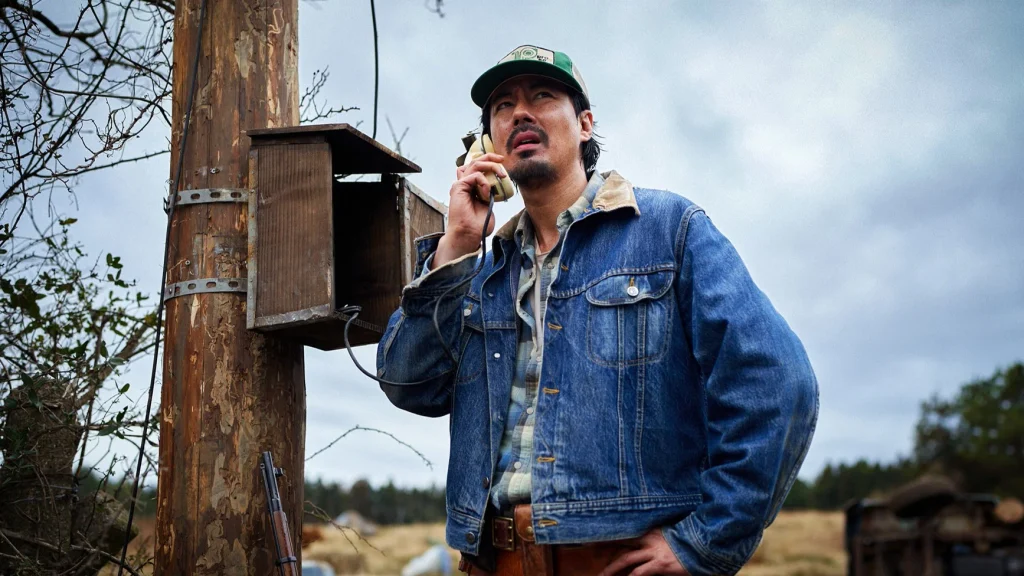
And then there is Zo In-sung as Sung-ki, who honestly has balls of steel. I do not mean to exaggerate, but this guy completely nails the character of someone who refuses to give up even when he is injured, vulnerable, and standing against something that can easily destroy him. There are moments when he gives off the energy of Captain America standing in front of Thanos, as if he is ready to fight no matter how impossible the situation looks. You will understand what I mean when you watch the film, because even when the creature nearly kills him, he somehow manages to come back into the action, adding a really interesting touch to his character.
Overall, I was pretty convinced by the performances because almost everyone felt like they belonged in this world. I also noticed something that I have enjoyed in several Korean films, where the way characters speak, react, and interact with each other creates natural humour even when the situation is extremely serious. Train to Busan is a good example of this, because even when the zombie apocalypse is unfolding and everything is falling apart, certain moments of humour make the characters feel more human. I felt a similar quality in Hope, where the humour does not necessarily take away from the seriousness of the situation but instead makes the characters and their reactions feel more natural.
What I Liked About Hope
The biggest thing that stood out to me was the art direction, particularly the way the filmmakers created the destroyed environment of Hope Harbor. From the opening scenes to the end of the film, the village gives you the feeling that everything has been lost and there is no easy way to recover from what has happened. The destroyed buildings, the scattered bodies, and the overall condition of the surroundings make you feel that something massive and extraterrestrial has arrived and completely wrecked the place. You do not need someone to explain how dangerous the situation is because the environment itself tells you everything you need to know, and I really appreciate how effectively the film establishes that sense of destruction.
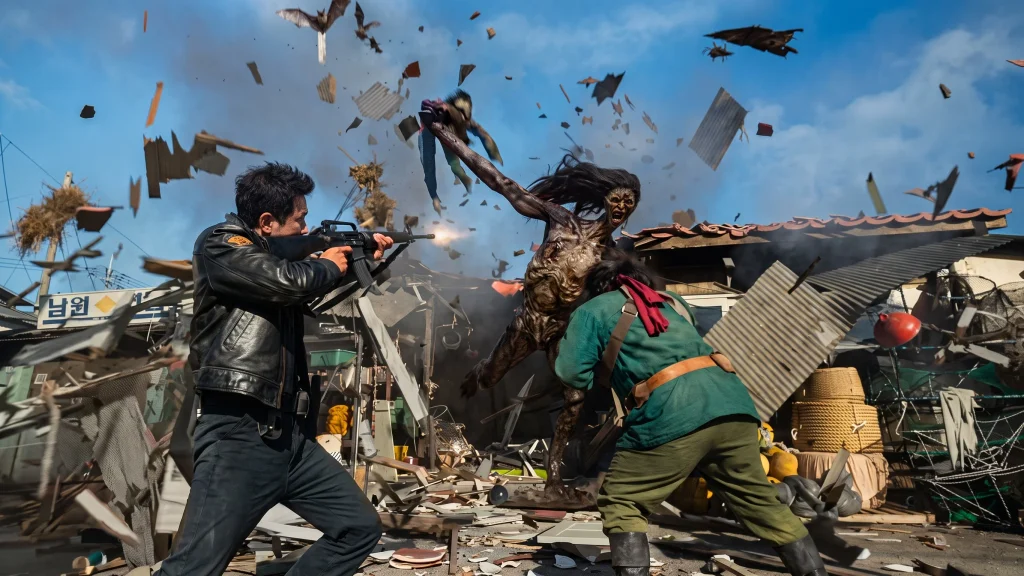
I also really liked the colours and the overall visual presentation, because the saturation makes certain scenes incredibly pleasant to look at despite the disturbing events unfolding on screen. The forest sequences, in particular, look beautiful, with the tall trees, grass, and the colours of the characters’ clothing blending naturally into the environment. Nothing feels particularly out of place, and the visual composition makes the world feel like an actual location rather than a collection of sets created for a movie. While the alien CGI reminded me of the kind of creature effects we have seen in films like Bipasha Basu’s Creature 3D, the creature designs themselves are quite interesting, especially because of their massive size, terrifying appearance, and ability to change their forms into other creatures.
Another thing I appreciated was how the film handles its climax, because it introduces an emotional perspective that you might not necessarily expect from an alien invasion movie. I do not want to spoil anything for you, but I would recommend paying close attention towards the climax and the scenes that follow it, because there are certain moments that add a different dimension to the story. Some of these scenes require you to follow the subtitles carefully, so make sure you do not lose focus when the film starts revealing more about what is happening. I particularly liked how these moments make you think about the events you have witnessed rather than simply ending the story with a series of action sequences.
The tracking shots during the climax are also really well executed, especially the scenes involving vehicles, creatures following humans, and people trying to hunt down and destroy the monsters. These are not necessarily things that you have never seen before in an alien invasion film, but the way the scenes are put together keeps you invested in what is happening. The movement, the anticipation, and the way the characters react to the creatures make these sequences engaging even when you can predict the general direction in which things are heading. There are moments where the film genuinely makes you feel the danger the characters are experiencing, and I think that is one of its biggest strengths.
I also want to appreciate the performances in these scenes because, as I mentioned earlier, Korean actors have a way of making their reactions feel incredibly natural. There are moments when characters are looking at the creatures or trying to escape from them, and you can genuinely feel their fear and desperation through their expressions.
What I Didn’t Like About Hope
While I appreciate the visual storytelling and the overall scale of the film, I am not a big fan of movies that stretch themselves longer than necessary without giving me enough reasons to remain invested throughout the runtime. I have watched long dramas where something or the other keeps me hooked, whether it is the acting, the screenplay, the emotional journey, or simply the anticipation of what is going to happen next. Hope has some good performances and genuinely interesting visual moments, but there are stretches where the storytelling feels too slow to maintain that same level of engagement.
I genuinely think this could have been a much faster-paced alien horror film that wrapped up within two hours without losing its visual appeal or the atmosphere it was trying to create. The art direction and cinematography are strong enough to make the experience worthwhile, but the film sometimes takes too long to move from one point to another. This is the biggest issue I had with Hope, because although I appreciate what the filmmakers were trying to achieve, I did not always feel that the extended runtime added enough to the overall experience. By the time the film reaches its later stages, I was more invested in the visual spectacle than in the story itself.
Are There Any Post-Credit Scenes in Hope?
Yes, Hope has a mid-credits scene, so make sure you stick around for a little while after the film ends. You do not need to wait until the entire credits sequence finishes, but the additional scene is worth watching because it hints at something more.


Discussion
Join the conversation — comments are for members.
Create an account or log in